263 Students
Stress and anger are natural human responses, but when they are not managed effectively, they can affect relationships, decision-making, workplace performance, and overall wellbeing. In Canada’s fast-paced work environments—across healthcare, education, corporate offices, and public services—emotional regulation is an essential skill for maintaining balance and professionalism. The Diploma in Stress and Anger Management is designed to help learners understand emotional …
Stress and anger are natural human responses, but when they are not managed effectively, they can affect relationships, decision-making, workplace performance, and overall wellbeing. In Canada’s fast-paced work environments—across healthcare, education, corporate offices, and public services—emotional regulation is an essential skill for maintaining balance and professionalism.
The Diploma in Stress and Anger Management is designed to help learners understand emotional triggers, behavioural patterns, and practical ways to respond calmly under pressure. The course combines psychological understanding with structured coping techniques, focusing on both prevention and response strategies for better emotional control in real-life situations.
This programme is suitable for beginners, working professionals, caregivers, and anyone who wants to improve emotional balance and communication. It supports personal development, workplace wellbeing, and healthier responses to stress and conflict in everyday life.
Please note: This Diploma in Stress and Anger Management Course only gives you the theoretical knowledge that you need to excel in this field. This Course doesn’t entitle you to practise as a professional in this specific field.
By the end of the Diploma in Stress and Anger Management Course, learners will be able to:
All of our courses, including this Diploma in Stress and Anger Management Course Course, are fully accredited, providing you with up-to-date skills and knowledge and helping you to become more competent and effective in your chosen field.
All of our courses are accredited by the CPD Quality Standards as conforming to universally accepted Continuing Professional Development (CPD) guidelines.
The Quality Licence Scheme (QLS) is a trusted endorsement framework that certifies high-quality, non-regulated training programmes across various sectors.
The Association of Healthcare Trainers (AoHT) promotes high-quality healthcare training, supporting providers to deliver relevant, industry-aligned education and improve professional standards.
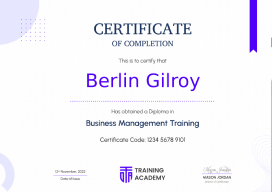
Once you’ve successfully completed your course, you will immediately be sent a digital certificate. Also, you can have your printed certificate delivered by post (shipping cost CA$9.99). All of our courses are fully accredited, providing you with up-to-date skills and knowledge and helping you to become more competent and effective in your chosen field.
This module introduces the biological and psychological foundations of stress, explaining how the nervous system reacts to pressure through the fight-or-flight response. Learners examine everyday stress triggers in personal life, workplace environments, and social settings, gaining insight into how stress builds over time.
Focuses on long-term behavioural and lifestyle adjustments that support emotional stability. It covers sleep regulation, nutrition awareness, time management, and habit formation strategies that help reduce chronic stress levels.
Explores proactive problem-solving techniques used to reduce stress by changing external conditions. Learners understand how decision-making and environmental adjustments can directly reduce emotional pressure.
Examines when avoidance is a healthy strategy rather than a negative behaviour. It includes boundary setting, prioritisation, and recognising situations where disengagement protects mental wellbeing.
Focuses on emotional acceptance and resilience-building when situations cannot be changed. Learners explore cognitive reframing techniques that help reduce emotional resistance and improve coping ability.
Explains how structured daily routines create psychological stability and predictability. This module highlights how consistency in habits reduces uncertainty and improves emotional control.
Explores how physical surroundings influence emotional states. Learners study sensory regulation, calming environments, noise control, and space organisation techniques that reduce stress exposure.
Covers body-based stress relief methods such as controlled breathing, progressive muscle relaxation, and grounding exercises. These techniques help regulate physiological stress responses.
Focuses on emotional responses to life-changing situations such as loss, transition, or crisis. It introduces coping mechanisms that build psychological resilience during high-impact events.
Encourages active reflection and application of learned techniques in real-life scenarios. Learners are guided to identify personal stress patterns and begin behavioural change.
Introduces anger as an emotional response linked to perceived threat, frustration, or injustice. It explains internal triggers, escalation patterns, and behavioural outcomes.
Highlights constructive and destructive ways of responding to anger. Learners explore communication styles that escalate conflict versus those that promote resolution.
Focuses on emotional regulation techniques that help pause reactive behaviour. It includes mindfulness strategies and cognitive control methods to manage impulsive responses.
Teaches conflict de-personalisation techniques, helping learners focus on issues rather than individuals. This improves objectivity in emotionally charged situations.
Explores structured communication and negotiation techniques aimed at identifying root causes of conflict. Emphasis is placed on collaboration and active listening.
Builds on earlier modules by introducing step-by-step problem-solving frameworks. Learners develop strategies for reaching practical and mutually acceptable solutions.
Guides learners in creating a customised stress and anger management strategy. This includes identifying triggers, selecting coping techniques, and building daily emotional regulation habits.
Introduces a structured framework based on Awareness, Analysis, and Action. This model helps learners systematically respond to emotional triggers instead of reacting impulsively.
Focuses on interpersonal conflict management, especially in high-stress environments. Learners study de-escalation techniques and communication strategies for handling aggressive behaviour.
This final module integrates all previous learning into a complete emotional regulation system. Learners develop a long-term approach to managing stress and anger in both personal and professional contexts.
You can work in support services, HR assistance, community care, and workplace wellness roles.
Yes, a certificate is awarded after successful completion of the course.
Courses generally focus on recognizing the biological and psychological roots of anger, stress response regulation, cognitive restructuring (identifying unhelpful thinking), assertiveness training, and constructive problem-solving.
Most professional diploma and certificate programs require applicants to have a high school diploma, while some advanced programs require a previous degree in psychology, social work, or a related healthcare field.
Timelines vary widely depending on the provider and depth of the program. Short professional workshops can be completed in just a few days, while comprehensive diploma programs generally span between 6 to 12 weeks.
A diploma is often used for continuing education or as a specialized add-on to an existing resume. If your goal is to practice psychotherapy clinically, you will typically need to ensure the program aligns with regulatory bodies like the College of Registered Psychotherapists of Ontario (CRPO) or equivalent provincial associations.
| Module One: Understanding Stress | |||
| Understanding Stress | 00:09:00 | ||
| Module Two: Creating a Stress-Reducing Lifestyle | |||
| Creating a Stress-Reducing Lifestyle | 00:08:00 | ||
| Module Three: Altering the Situation | |||
| Altering the Situation | 00:07:00 | ||
| Module Four: Avoiding the Situation | |||
| Avoiding the Situation | 00:08:00 | ||
| Module Five: Accepting the Situation | |||
| Accepting the Situation | 00:07:00 | ||
| Module Six: Using Routines to Reduce Stress | |||
| Using Routines to Reduce Stress | 00:10:00 | ||
| Module Seven: Environmental Relaxation Techniques | |||
| Environmental Relaxation Techniques | 00:08:00 | ||
| Module Eight: Physical Relaxation Techniques | |||
| Physical Relaxation Techniques | 00:11:00 | ||
| Module Nine: Coping with Major Events | |||
| Coping with Major Events | 00:09:00 | ||
| Module Ten: Our Challenge to You | |||
| Our Challenge to You | 00:10:00 | ||
| Module Eleven: Understanding Anger | |||
| Understanding Anger | 00:17:00 | ||
| Module Twelve: Do’s and Don’ts | |||
| Do’s and Don’ts | 00:07:00 | ||
| Module Thirteen: Gaining Control | |||
| Gaining Control | 00:11:00 | ||
| Module Fourteen: Separate the People from the Problem | |||
| Separate the People from the Problem | 00:10:00 | ||
| Module Fifteen: Working on the Problem | |||
| Working on the Problem | 00:12:00 | ||
| Module Sixteen: Solving the Problem | |||
| Solving the Problem | 00:10:00 | ||
| Module Seventeen: A Personal Pla | |||
| A Personal Plan | 00:08:00 | ||
| Module Eighteen: The Triple A Approach | |||
| The Triple A Approach | 00:08:00 | ||
| Module Nineteen: Dealing with Angry People | |||
| Dealing with Angry People | 00:15:00 | ||
| Module Twenty: Pulling It All Togethe | |||
| Pulling It All Together | 00:08:00 | ||
| Google Review | |||
| Google Review | 00:00:00 | ||
$125 Original price was: $125.$20Current price is: $20. ex VAT
SAVE 84% - OFFER ENDS SOON
![]() |
01 Year of full Course access
Intermediate
Endorsed Certificate of Compleiton